Module
9 Decentralization and Local Governance
In this module, you will be able to:
In unitary systems of government, the national or the central government is given substantial control and power over the affairs or directions of the country. Unlike in federal systems where the local government and central government are supreme in their own spheres, unitary systems (like in the Philippines) let the national government decide for the country. In this system, all laws or policies are expected to come from the central government and are trickled down to the local level through power sharing. The previous topics presented the powers of the executive, legislative, and judiciary at the national level. What was presented was governance at the central level. How about governance at the local level? Just like the national government, the local governments are likewise divided into three branches—the executive, legislative, and judicial. However, the Supreme Court has control over the local courts, while the Local Government Units (LGUs) have executive and legislative powers. How does this happen? This section presents issues related to local governance and decentralization.
Big Idea
Local governments bring the people closer to the government. They can address specific community welfare needs and desires. They also address selected issues without involving the national government.
Local governments are the political subdivisions of a state. They are at the lowest level of an elected territorial organization within a state, both in federal or unitary governments (Atienza 2006). In a unitary system like the Philippines, local governments are created by the national government through legislation. Given this, the national government can create, merge, and abolish them (Legaspi 2001). Local governments are given the task to provide local public services and implement national welfare policies (Atienza 2006).
Big Idea
To deliver effective services and address welfare issues, various sectors should take part in local governance. This is to ensure that interests and desires of people are addressed appropriately.
Decentralization, Democratization, and Governance
The process that involves the transfer of planning, decision-making, or administrative authority from the central government to its field organizations, local government, or nongovernmental organizations is known as decentralization (Rondinelli and Cheema, n.d. in Atienza 2006). There are four major forms of decentralization:
1.Deconcentration – It involves the redistribution through the transfer of power on administrative responsibilities within the central government. An example of this is the shifting of workload from the central government agency to its own field staff outside the national capital.
2.Delegation to semi-autonomous or parastatal organizations – It involves the delegation of decision-making and management authority for specific functions to bodies that are not under the direct control of the central government. Examples of these bodies are public corporations, and regional planning and area development authorities.
3.Devolution – It involves the process by which the central government relinquishes certain functions to local government units. It thus seeks to strengthen or to create independent levels or units of government. It is an arrangement where there are reciprocal, mutually beneficial, and coordinated relationships between central and local governments.
4.Transfer of functions from government to nongovernmental institutions – It involves the transfer of planning and administrative powers or functions to voluntary, private, or nongovernmental institutions.
Decentralization and democratization reinforce each other. Decentralization enhances local participation and therefore strengthens democracy in general. Decentralization can only take place within democratic processes, and it necessitates the local government systems to have good management and democratic accountability. Under the 1987 Constitution, the structure and role of the Philippine government is guided by the principle of decentralization.
What Have I Learned So Far?
1.Why is decentralization considered the most effective strategy in making the government work?
2.What are the characteristics of a decentralized government in the Philippines?
Reflect Upon
1.Visit a municipal hall near you. Pay attention to its information bulletin. What are the programs of the national government that are also implemented in your community? Share your answers with the class.
2.As a student, what youth program would you like to propose? In what ways does it contribute to youth development?
Local Government Units in the Philippines
Historical Overview
Devolution is not new to the Philippines. Even before the coming of the Spaniards, there have been local spheres of power. The barangay, the most basic political unit, comprises about 30 to 100 households. The datu rules the barangay and exercised governmental powers as discussed in the previous modules. The barangays would later on be incorporated into the Spanish colonial regime. These indigenous and autonomous political institutions have not attained a level of organization beyond the kinship principle (institutions functioning on the basis of deep human relationship, which are not necessarily biological or marital in nature).
Big Idea
The different periods in Philippine political history show different forms of power sharing between the national and the local governments.
It was during the time of the Spaniards that a centralized system of governance was introduced. The barangay or the barrio was retained up to the contemporary days as the most basic administrative unit while other tiers were created: pueblos (municipalities), cabildos/ayuntamiento (cities), and provincias (provinces). The governor-general was supreme over all affairs including local ones. While the Maura Law of 1893 gave greater autonomy to towns and provinces in Luzon and Visayas, its effects were not felt because of the Revolution that broke in 1896. Nonetheless, the Spanish occupation had its influence on the development of local governments—the most important of which was the high degree of centralization in Manila, which thereafter characterized central-local relations. During the Malolos Republic, local governments were also created under the Malolos Constitution. Among the important provisions of the said constitution were the creation of municipal and provincial assemblies, autonomous local units, and popular and direct elections. However, these did not function as expected due to the continuing revolution.
The coming of the Americans saw changes in the structure of local governance in the colonial Philippines. The Americans promulgated a number of policies recognizing local autonomy, emphasized local self-government with the objective of building democracy from below, and introduced municipal and provincial elections. The new colonizers, however, moved toward greater centralization to prevent the negative effects of unrestricted Filipino rule by maintaining a highly centralized politico-administrative structure. Thus, Manila became not just the political, but the economic and cultural center as well. Manila was even dubbed as “Imperial Manila” due concentration of political, cultural, and economic activities. However, the bureaucracy created by the Americans was weak, which reinforced the decentralized nature of the Philippines. After all, the American rule focused more on the creation of representative institutions rather than on the creation of a central bureaucracy. It was only during the 1934–1935 constitutional convention that centralization became a key governmental policy. Formal centralization continued during the Japanese occupation and an even greater degree of central control on local governments was imposed. The Japanese collaborators imposed authority on the local governments.
Big Idea
The Local Government Code of 1991 (RA 7160) is a law that institutionalized decentralization in the Philippines. This landmark law has specified mandates to the local governments to enable them to attain their fullest development as self-reliant communities.
The postwar period (1946–1972) saw a trend toward decentralization. A number of significant legislation were passed including Republic Act (RA) 2264 (Local Autonomy Act), RA 2370 (The Barrio Charter), and RA 5185 (The Decentralization Act of 1967), among many others. While instances of decentralization existed in the Martial Law period, these were mere extensions of central governmental power. Martial Law and the strength of the military paved the way for a centralized system under a dictatorship.
The post-1986 period saw the move toward greater decentralization. The 1987 Constitution (Article II, Section 25) provided that “the state shall ensure the autonomy of local government.”
Article X of the present constitution is devoted to the general provisions of local governments in the Philippines. It is also provided for the creation of the Autonomous Region in Muslim Mindanao (ARMM) and the Cordillera Administrative Region (CAR). Moreover, LGUs were given the power to create their own sources of revenue and to levy taxes and charges (Section 5). LGUs shall also be provided with a just share from the national taxes (Section 6) and shall have an equitable share in the proceeds of the utilization and development of national wealth within their respective areas (Section 7). The provisions in the constitution gave rise to the enactment of RA 6766 and RA 6734, which created the CAR and the ARMM, respectively; and RA 7160 or the Local Government Code of 1991.
What Have I Learned So Far?
How did the course of decentralization evolve in Philippine history? Identify its changes and innovations.
Reflect Upon
1.What are the impacts of decentralization in the quest to improve the lives of people at the grassroots level?
2.How does history shape the kind of decentralization we have at present?
The Structure of Local Government
The Local Government Code of 1991 brought about significant changes, among which are the devolution of basic services, facilities, and regulatory powers; and the enhancement of governmental and corporate powers. The provinces, cities, municipalities, and, barangays enjoy autonomy—specifically on local affairs—but the president of the country exercises general supervision over these local government units (Article X, Section 4). The structure of local government is illustrated below.
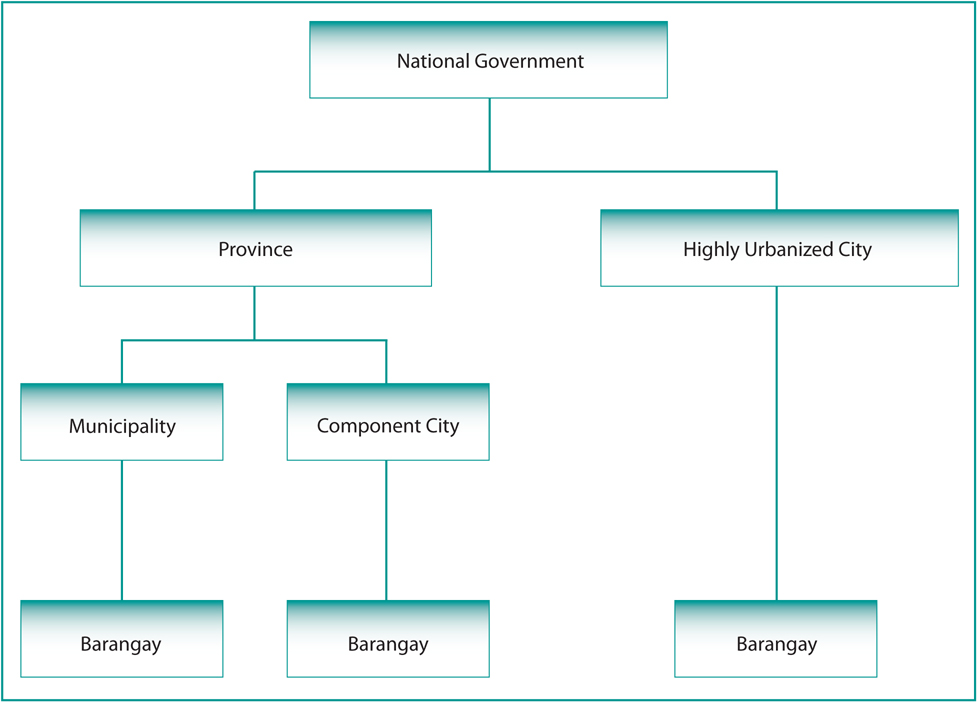
Fig. 9.1 The structure of local government (Atienza 2006)
The 1991 Local Government Code decentralized functions and responsibilities to local government units. The four major roles are:
1.Efficient service delivery
2.Management of the environment
3.Economic development
4.Poverty alleviation
Reflect Upon
1.How well does your local government perform in terms of its major functions? Provide some indicators for every function to prove your answer. You can also cite specific examples to support your answer.
2.As a student, what programs in your city or municipality can you participate in? Create an explanation on how your participation influences your role as a member of your community.
Beyond Walls 9.1 Apply It in Real Life
You are appointed as the head of the search committee for Galing Pook Awards. This award is given as a form of recognition of local government units (LGUs) who have exemplified innovative and effective programs on community development. You are tasked to look for cities and municipalities around the country with social development programs that have made strong impact in community development. You also need to create a list of criteria to be used in evaluating the candidates. Your output is an infographic summarizing the information of each LGU who qualified for the award and the evaluation tool you created. Your infographic must comply with the following criteria: clarity and organization of information, impact of the programs of each local government identified, evidence shown, and creativity.
Criteria for the Creation of LGU
Article X, Section 10 of the present constitution specifically provides that “no province, city, municipality, or barangay may be created, divided, merged, abolished, or its boundary substantially altered, except in accordance with the criteria established in the local government code and subject to approval by a majority of the votes cast in a plebiscite in the political units directly affected.” Under the Local Government Code of 1991, the following are the criteria for LGU creation.
Table 9.1 Criteria for the Creation of Local Government Units
| LGU | Income | Population | Land Area |
| Barangay | 2 000
5 000 for Metro Manila and other metropolitan political subdivisions |
||
| Municipality |  2.5 million 2.5 million |
25 000 | 50 sq. km |
| City | 20 million |
150 000 | 100 sq. km |
| Highly Urbanized City | 50 million |
200 000 | |
| Province | 20 million |
250 000 | 2 000 sq. km |
Sources: Local Government Code of 1991; Atienza (2006)
Impacts of Devolution
According to Atienza (2006), devolution paved the way to further democratization and had important impacts on the way politics is practiced in the country. She contended that democratization and the progress made by the civil society became a counterweight to traditional Philippine politics. She noted the following observations:
What Have I Learned So Far?
1.What are the different levels of LGUs in the Philippines? In what ways do these levels differ from one another?
2.Visit your barangay hall and ask for the following information of your community: land area, population, and income. What observations can you make in terms of governing your community with the data you have obtained?
Beyond Walls 9.2 Read and Answer
The main goal of decentralization as a strategy is to reduce poverty by bringing social services and economic opportunities to people at the grassroots level. Read the article on the shortcomings of decentralization in the Philippines at http://www.academia.edu/11461987/Philippines_Ten_Years_of_Decentralization_and_Challenges_for_the_Next_Decade. Then answer the following questions:
1.Shown here are the top five provinces in the Philippines with the highest poverty threshold and poverty incidence among the population in the first semester of 2015. What does this show about decentralization in the country?
| Province | Poverty Threshold of First Semester, 2015 (%) |
| Lanao del Sur | 74.3 |
| Sulu | 65.7 |
| Saranggani | 61.7 |
| Northern Samar | 61.6 |
| Maguindanao | 59.4 |
Source: https://psa.gov.ph/sites/default/files/1st%20Sem%202015%20Poverty_Publication_0.pdf
2.What are the issues and challenges that the Philippines have confronted in using the strategy of decentralization?
3.Does the framework of decentralization prepare the Philippines for a federal form of government?
Issues and Challenges
Several years after the Local Government Code of 1991 devolved powers and services from the national to the local governments, the law has yet to accomplish its purpose of building self-reliant communities that shall contribute to national welfare and development (The Asia Foundation, n.d.). Some organizations have also observed that several LGUs still fail to address the most basic needs of their constituents, still lack mechanisms for transparency and accountability, and have yet to exercise a meaningful autonomy from the national government on particular issues and concerns. There have been local government units who are highly dependent on national government.
Atienza (2006) noted that parts of the country are still governed by traditional politicians who use coercion and patronage rather than platforms-based stance to encourage local participation. While decentralization aimed toward democratization, such rule by traditional politicians goes against what the 1987 Constitution and 1991 Local Government Code aimed in the first place. Decentralization may have triggered more participatory and development-oriented LGUs because of easy identification on specific needs and wants at the community level, but not all LGUs have become more democratic or economically developed as a result of decentralization. Apart from this, Atienza (2006) held that some national government officials and agencies still have centralist tendencies that prevented successful decentralization efforts. There still prevails an unequal distribution of financial resources such as the internal revenue allotment, and this raises questions as to whether or not national agencies are more favored than local governments. There are also problems regarding personnel and human resource that persist in local government; this points to problems on training and doubts on the competency to govern and provide welfare to the people.
So you may ask—what is the future of decentralization in the Philippines? The answer to this question relies on a number of factors. First, you may look at the impact of the international arena; after all, globalization has affected the course of local governance. Second, you may want to observe the state of civil society in the Philippines. A vibrant civil society that pressures or influences local governments to serve well may define the future of how LGUs provide services to their constituents. Finally, you may try to assess the degree through which people participate in local affairs to advance community development.
Perhaps you are wondering how ordinary citizens could take part in affairs of decentralization. The logic is simple: good governance, as a feature of an ideal political community, has been centered with the inclusion of the people in the process of development. There might be mechanisms that encourage popular participation but if individuals do not engage themselves in such efforts, then such attempts of inclusiveness become futile. After all, welfare projects are for the people.
There are still other determinants that will decide the success of decentralization in the country. You have learned that decentralization and democratization reinforce each other; thus, one thing is for sure—the dynamic relationship between the citizens and their local governments is significant in the prospect of development.
Extend Your Knowledge
For a discussion on the relationship between decentralization and quality of local governance, you may visit http://www.econstor.eu/bitstream/10419/46627/1/494483288.pdf.
For a presentation of the impacts of devolution on several issues, check the following websites:
For a list of LGU officials and their contact details, you may go to http://www.gov.ph/directory/local-government-units/.
For more descriptions of decentralization in Asia, read the article “Decentralization in Asia: Survey” by M. Ramesh at https://www.tandfonline.com/doi/full/10.1016/j.polsoc.2013.02.004.
Essential Learning
The national government consists of the machinery of the central government (as discussed in the previous modules), as differentiated from the local governments, which are political subdivisions that have substantial control over local affairs. Each local government unit has a set of locally elected and appointed officers, their functions being mandated by the 1991 Local Government Code. The post-1986 period aimed at strengthening local governments for self-governance and sufficiency given the fact that people are closer to their local governments than to the central government. The idea of decentralization lies in the simple logic that local governments are expected to better address issues because they can easily determine the problems of their constituents. However, decentralization—specifically devolution—has its fair share of successes and failures. While it has led to significant improvements, the prospect of decentralization in the country is still confronted with issues and challenges. Local governments may be able to identify problems instantly, but they are not equipped with both expertise and resources to confront these problems. Nonetheless, the future of decentralization is determined by a number of factors including, but not limited to, the context of globalization, civil society, popular participation, and central-local relations.